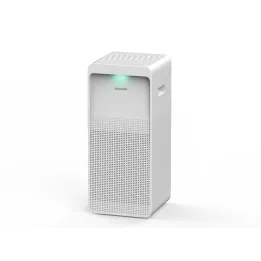
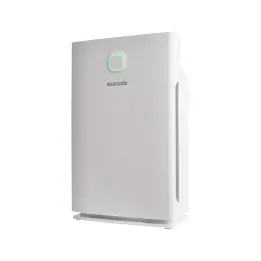
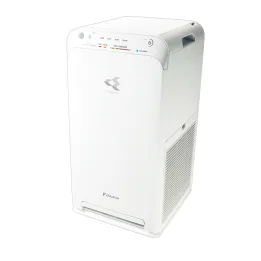
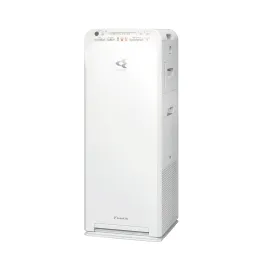
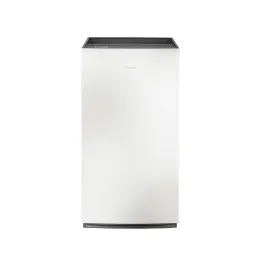
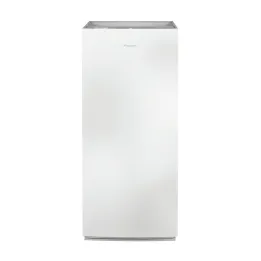
Air Purifiers
Air purifiers for home and office
Choose a good air purifier based on the data: CADR, room size, filtration method, noise, consumption and maintenance cost matter more than the largest number on the box.
An air purifier is designed to reduce the amount of airborne particles in a single room. Depending on the filtration technology used and the airflow through the device, it can remove pollen, house dust, mould spores, pet hair and smoke particles from the air.
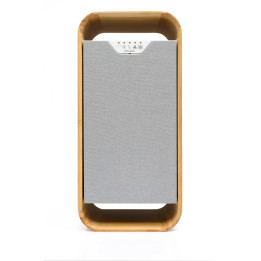
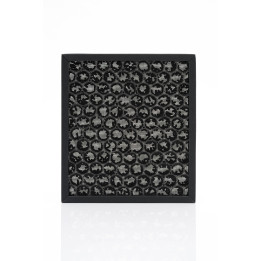
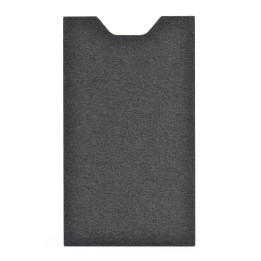
In our air purifiers category, we offer OneLife solutions where the main focus is on a washable electrostatic collector instead of regular replacement of the main filter. A separate activated carbon filter is available for odours and volatile organic compounds. The guide below helps you decide which air purifier is suitable for your room and how you intend to use it.
What helps you assess a good air purifier
- A measurable effect on particles in the room
Instead of general promises, check the CADR, meaning the clean air delivery rate in m3/h. This figure tells you how much cleaned air the device actually supplies to the room in one hour. - The right choice for the room size
An air purifier works best in a room for which it has sufficient capacity. When choosing, do not look only at the maximum stated floor area, but also at the room volume, how open the floor plan is and the expected air load. - Real costs after purchase
With conventional dense filters, replacement consumable filters need to be considered. With washable collectors, the main part is cleaned and reused, while the consumable part may be an activated carbon filter if you use it for odours and VOC.
1. Why choose an air purifier at all
An air purifier makes sense where you want to reduce the amount of particles that remain in the air during ventilation, cooking, living, working or sleeping. It is most beneficial in the room where you actually spend several hours a day, for example a bedroom, living room or home office.
If you search for the term air purifier forum, you are usually looking mainly for real-world experience. The honest answer is that the device is not a solution for the whole home at once and does not replace ventilation. It is, however, very useful as a supplement to ventilation when you want to reduce the amount of airborne particles in a selected room.
- Choose the room where the device will run for the longest time, not the total floor area of the home.
- For particles such as pollen, house dust, mould spores, pet hair and smoke particles, particle capture efficiency is important.
- For odours from the kitchen, textiles, new furniture, cigarette smoke or pets, check the option of an activated carbon filter.
- The air purifier should have unobstructed air inlet and outlet; do not place it tightly in a corner, under a table or behind a curtain.
2. What CADR is and how to read it
CADR means clean air delivery rate and is usually stated in m3/h. The figure tells you how much air the device not only moves but also cleans in one hour. CADR is therefore more useful than fan speed alone or a general airflow statement.
A higher CADR means a faster reduction in particle concentration, but only in a suitably sized room. When comparing devices, it is important that CADR is measured according to the stated method and, if possible, in an independent laboratory. In particular, check whether the figure refers to particles, odours or another type of pollutant.
- Read CADR in m3/h: a higher number means more cleaned air per hour.
- Do not equate ordinary fan airflow with CADR, because airflow does not tell you how much air has actually been purified.
- For a room of 25 m2 with a ceiling height of 2.5 m, the volume is approximately 62.5 m3; assess CADR in relation to volume, not only floor area.
- If the device has separate data for different types of particles or loads, use the one closest to your intended use.
3. How to choose according to room size
The most common purchasing mistake is choosing by the largest advertised floor area. This number is useful as a guide, but it does not tell the whole story. The result is affected by ceiling height, open doors, furniture, the position of the device and how quickly you want to clean the air.
In practice, it is sensible to choose an air purifier with some reserve capacity. If the room is at the upper limit of the recommended floor area, the device will usually spend more time running at a higher speed, which means more noise. If the room is small or medium-sized, the device can more often run more quietly.
- For a bedroom or office, choose a model with sufficient CADR for the actual room size and a quiet operating mode.
- For a living area with a kitchen, take into account a higher load from particles and odours.
- If you have an open floor plan, an air purifier will not be as effective as in an enclosed room of the same floor area.
- For products in our range, we therefore highlight practical recommendations in addition to the manufacturer's data whenever independent tests are available.
4. Filters, activated carbon, noise and consumption
Air cleaning technologies differ mainly in how they capture particles. Conventional dense filter cartridges retain particles in a membrane and are replaced after a certain period of time. Electrostatic collectors electrically charge particles and capture them on collecting plates; in designs with a washable collector, the main part is cleaned and reused. This is not a HEPA filter, so comparison by HEPA classes is not appropriate.
Activated carbon has a different role from a particle filter. Odours, formaldehyde and similar volatile organic compounds are gases, so a particle collector cannot capture them in the same way as dust or pollen. For such loads, an activated carbon filter is required; it is a consumable part and is replaced according to use.
For noise, always check dB(A), the operating mode and the measurement distance. A single figure without distance and without stating the mode is not enough for a decision. For consumption, look at the power in W in the normal and maximum modes, as an air purifier often runs for several hours at a time.
- If you want fewer consumable filters, check models with a washable main collector.
- If odours or VOC are important, add or choose an activated carbon filter.
- For a bedroom, a night or quiet mode is important; Boost mode is more suitable for shorter, intensive cleaning.
- With electrostatic systems, also check the documented ozone measurement or the statement that the device does not produce harmful ozone.
Frequently asked questions
Which is the best air purifier?
The best air purifier is the one that suits your room and how you use it. To decide, compare CADR, recommended room size, noise in normal and night modes, consumption and filter costs. If you are mainly interested in particles, the particle filtration data is key. If odours or VOC bother you, you also need activated carbon.
Is there a difference between the terms air cleaner and air purifier?
In practice, the terms are used for the same group of products. In our category we mainly use the term air purifier because customers search for it most often, while air cleaner means the same type of device.
Does an air purifier replace ventilation?
No. An air purifier filters the air in the room, but it does not replace it with outdoor air. The most sensible use is a combination of regular ventilation and air cleaning in the room where you spend the most time.
Does an air purifier remove odours?
A particle filter alone is not primarily intended for odours. For odours from the kitchen, cigarette smoke, textiles, new furniture or pets, an activated carbon filter is needed because many odours and VOC are gases, not particles.
How often do filters need to be replaced?
It depends on the technology. In devices with consumable filters, the main filter is replaced according to the manufacturer's instructions. In devices with a washable electrostatic collector, the main collector is cleaned and reused, while the activated carbon filter remains a consumable part and is replaced according to the duration of use.
Related categories